


How to Pick Things Up with Back Pain
- Nov 23, 2025
- 4 min read
If you’ve recently experienced back pain, read this article to take the first steps to recovery.
Back pain can make even the simplest tasks become difficult. Bending over to tie your shoes or picking up an item from the ground can feel daunting. Thankfully, there are effective strategies you can adopt to protect your spine and maintain your daily activities. The following four techniques—hinge, lunge, squat, and golfer’s lift—can keep you mobile and help you move safely, allowing you to live an active, fulfilling life again.
The Hinge
The hinge movement is essential for safeguarding your back and stretching your hamstrings. This technique involves bending at your hips while keeping your spine neutral. It’s especially useful for picking items up from the ground without worsening your back pain.
To perform a hinge, stand with your feet shoulder-width apart. Bend your knees slightly and push your hips back as if you're trying to close a car door with your butt.

Keep your back in a neutral position by stacking your ribs over your hips.
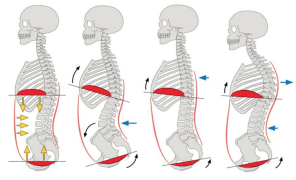

When bending forward it's critical to stick your butt out so you maintain an anterior pelvic tilt because this ensures the stress of bending forward is placed on the hips instead of the spine.

Once you've pushed your hips back as far as you can, bend your knees a bit more to reach the object. Once you have a grip on the item, brace your core as if you were going to get punched in the stomach and return to the starting position.

Regularly practicing the hinge with daily tasks will build your back muscles and stretch your hamstrings without requiring additional exercise or hours of stretching.
The Lunge
Lunging is another strategy to help you bend down while maintaining a neutral spine.

To practice a lunge, step back and slightly to the side with one foot. Lower your back knee towards the ground and allow your upper body to bend forward at the hips, similar to a deadlift. The back knee can touch the ground as you reach for the object, then to stand remember to brace your core and push off with both feet. If strength is a limiting factor you can also place one or both hands on the front knee to assist your legs.
The Squat
Squatting is a natural human position used for resting, eating, and even pooping! Unfortunately, most seats are tall so we lose mobility and the ability to squat down towards the ground. Incorporating daily squats or squat holds is a great way to maintain youth in your knees and hips, and as you'll see it can help when picking things up as well.
To perform a proper squat, stand with your feet shoulder-width apart or slightly wider. As you lower down allow your heels to lift up so you're able to maintain an upright posture. Most people lack ankle mobility because of modern shoes, so if you try to keep your heels down it will be much harder to maintain a neutral spine.
Make sure that your knees push outward and not inward so you create space for your torso to sit down. Once at the bottom of the squat, grab the object, brace your core as previously discussed, and use your legs to stand up.

One of the biggest benefits of squatting is the deep knee bending keeps your knees healthy and lubricated. A few minutes per day in a deep squat can do wonders for your hip, knee, and ankle health.
The Golfer's Lift
The golfer's lift is seen on the golf course but it's a very useful strategy for picking things up off the floor with minimal strain on your back. It's basically a single leg deadlift.
To execute a golfer's lift, stand above the item you want to pick up. Shift your weight onto one leg, keep a soft bend in your knee, and lift the opposite leg up behind you as you bend down. Once you reach the object, simply return to standing.

The golfer's lift requires a lot of balance and control, but if you're able to practice this movement in daily life it will help you improve your balance and mobility while keeping your back safe.
Avoiding the Jefferson Curl
While it can be tempting to perform movements that involve moving at your back, such as the Jefferson curl, it is crucial to avoid these during recovery from back pain as this movement stresses your spinal discs and can worsen your condition. It teaches poor movement mechanics and it's not beneficial for athletics or daily life.

The key difference is with the Jefferson curl we avoid using the hips to use the lower back instead by maintaining a posterior pelvic tilt.
Instead, focus on the techniques mentioned above. Hinge, lunge, squat, and golfer’s lift are effective alternatives that keep your back safe and help to mobilize your hips. These strategies can help you navigate your daily tasks comfortably and safely.
Conclusion
Living with back pain can feel like a significant hindrance, but incorporating effective strategies like the hinge, lunge, squat, and golfer’s lift can help you regain your mobility. By practicing these movements, you reinforce good spine care, which is essential for your recovery.
Always pay attention to your body and consult a healthcare professional if your back pain worsens. Strengthening your core alongside these techniques can significantly boost your ability to move pain-free, allowing you to enjoy a more active and fulfilling life. Focus on your spine health, and you will find that even simple tasks like tying your shoes become manageable once more.
Hope this helps! - Tom

Comments